

In recent years, the concept of skin brightening has significantly evolved. Traditionally, skincare focused mainly on topical application. However, a new approach that combines both internal and external care is now gaining attention.
Among these approaches, glutathione has emerged as a key ingredient. It can be used both internally—through supplements or IV therapy—and externally in cosmetic formulations. Because of this dual approach, it has attracted strong interest in the beauty industry.
However, many people still have questions such as:
- Does glutathione really help with skin brightening?
- Is it safe to use in cosmetics?
- Can it be used globally in product development?
These questions are especially important for those considering OEM manufacturing or launching their own cosmetic brand. Understanding not only the ingredient itself, but also regulations, formulation design, and stability, is essential.
In this article, we explain from a practical Japanese cosmetic OEM perspective:
- What glutathione is
- Why it is used in brightening products
- Key formulation considerations
- Important regulatory and stability points
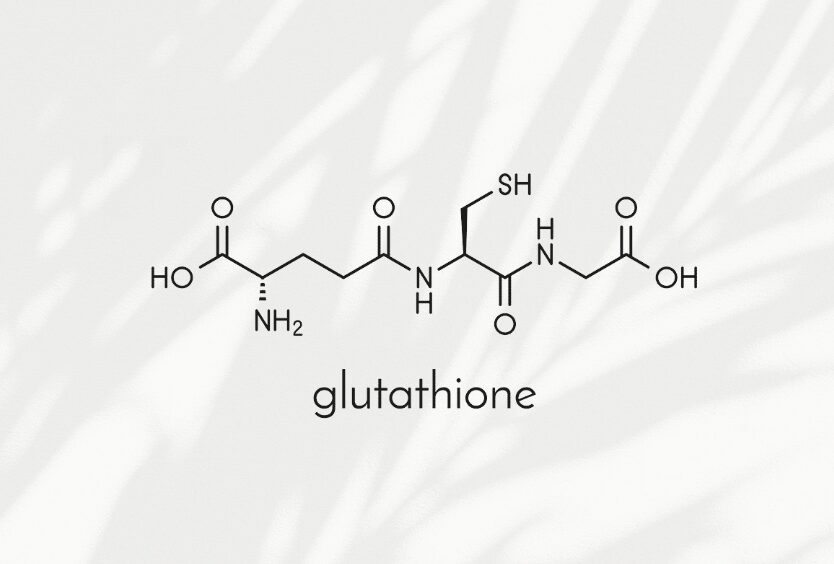
What Is Glutathione?
Glutathione is a tripeptide composed of glutamic acid, cysteine, and glycine. It naturally exists in the human body, particularly in the liver, where it plays a critical role in detoxification and antioxidant defense.
In practice, its “naturally occurring” nature is often used as a safety explanation in product marketing. However, when used as a cosmetic ingredient, quality and stability become critical factors.
For example:
- 低品質の原材料は変色の原因となる可能性があります。
- Oxidation may lead to unpleasant odor
- Poor stability can result in product complaints
Therefore, glutathione is considered both:
- A promising ingredient
- A technically challenging ingredient
Why Glutathione Is Valued as an Antioxidant
One of the main reasons glutathione attracts attention is its strong antioxidant activity.
Reactive oxygen species (ROS), caused by UV exposure and environmental stress, are major contributors to:
- Skin aging
- Dullness
- Loss of transparency
Glutathione helps reduce oxidative stress, supporting healthier-looking skin.
In real formulation practice, it is rarely used alone. Instead, it is commonly combined with:
- Vitamin C
- Vitamin E
This combination enhances overall antioxidant performance.
However, using glutathione alone often leads to:
- Low stability
- Reduced effectiveness
This is why formulation design as a whole is critical.
Why Glutathione Is Associated with Skin Brightening
Glutathione is often associated with skin brightening because it is believed to influence melanin production pathways.
Rather than “whitening” the skin directly, it works by:
- Supporting more even skin tone
- Reducing the appearance of dullness
In practical product development, it is commonly used for claims such as:
- “Skin clarity”
- “Radiance care”
- “Tone-evening”
However, it is important to note:
- It is not a drug
- Effects cannot be guaranteed
- Claims must comply with cosmetic regulations
Incorrect formulation or low concentration may result in:
- Weak perceived effectiveness
- 顧客の不満
How Glutathione Improves Skin Appearance
The brightening effect of glutathione is not about making the skin artificially white. Instead, it works through:
- Reducing excess melanin production
- Improving oxidative stress-related dullness
As a result, the skin appears brighter and more even-toned.
In OEM formulation, glutathione is typically used in combination with:
- Vitamin C (primary brightening effect)
- Niacinamide
- Other supporting ingredients
This layered approach significantly improves product performance.
Additional Beauty Benefits Beyond Brightening
Glutathione is not limited to brightening. It is also widely used for:
Anti-aging support
By reducing oxidative stress, it helps maintain:
- Skin firmness
- Smooth appearance
UV damage care
It does not block UV rays, but helps:
- Reduce oxidative damage after exposure
Skin condition stabilization
It supports:
- Overall skin balance
- Improved texture and tone consistency
Key Considerations When Formulating with Glutathione
From a professional OEM perspective, the biggest challenge is stability.
Glutathione is highly sensitive to:
- Air
- Light
- Temperature
Therefore, proper design must include:
- Airless containers
- UV-protective packaging
- Stabilization systems
Without these, product quality may quickly deteriorate.
Safety and Regulatory Considerations
Glutathione is generally considered safe because it naturally exists in the body. However, in cosmetics:
- Raw material purity is critical
- Impurities can cause irritation or instability
- Regulations vary by country (especially EU compliance)
For international products, ingredient compliance must be checked using:
- EU CosIng database
- Local regulatory frameworks
Glutathione vs Vitamin C: Which Is Better?
Both are widely used, but they play different roles:
| Ingredient | Role |
|---|---|
| Glutathione | Tone balancing, antioxidant support |
| Vitamin C | Strong brightening, direct melanin inhibition |
In practice:
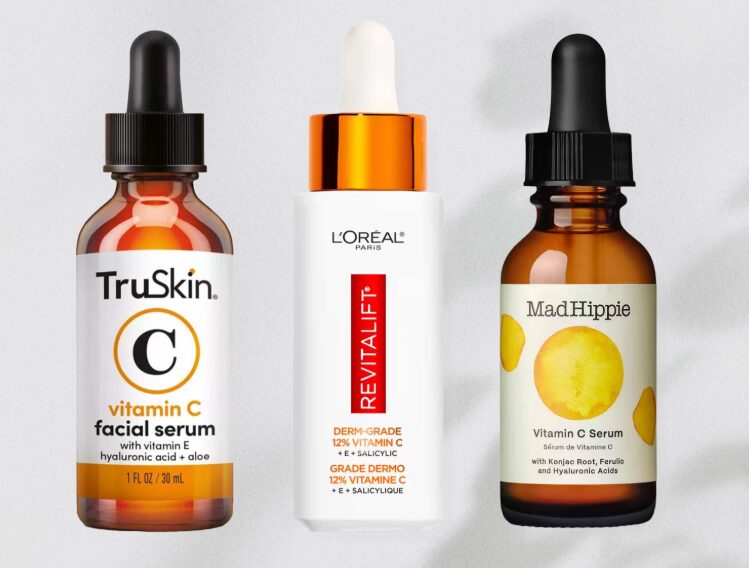
👉 Vitamin C = main active
👉 Glutathione = supporting enhancer
両方を併用することで、より効果的でバランスの取れた処方が生まれます。
Final Thoughts
Glutathione is a highly promising ingredient in modern skincare, especially for brightening and antioxidant care. However, its effectiveness depends heavily on:
- Formulation design
- Stability management
- Ingredient combination
- Packaging strategy
In real OEM development, success is determined not by the ingredient itself, but by how it is formulated.
If you are considering developing your own cosmetic product, especially for international markets, working with an experienced OEM partner is essential.
💡 Want to Start Your Own Brand?
If you are looking to develop cosmetic products from small lots:
👉 https://ai-cosmetic.co.jp/cosmetics-oem-small-lot/
👉 https://ai-cosmetic.co.jp/oemodm/
Cosmetic Regulations & Safety
- 欧州委員会 – CosIngデータベース
👉 https://ec.europa.eu/growth/tools-databases/cosing/
- U.S. FDA – Cosmetics Overview
👉 https://www.fda.gov/cosmetics
- Ministry of Health, Labour and Welfare (Japan)
👉 https://www.mhlw.go.jp/english/
■ Ingredient & Scientific Background
- PubChem – グルタチオン
👉 https://pubchem.ncbi.nlm.nih.gov/compound/Glutathione
- National Institutes of Health (NIH)
👉 https://www.nih.gov/
■ Industry / Market Insight
- パーソナルケア製品協議会(PCPC)
👉 https://www.personalcarecouncil.org/
- Cosmetics Europe
👉 https://cosmeticseurope.eu/

コメント