

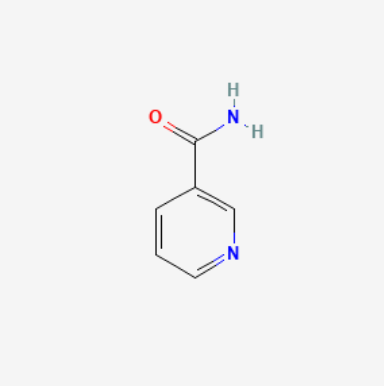
In recent years, niacinamide has become a widely used ingredient in many skincare products.
It is gaining significant attention due to its ability to address multiple skin concerns such as brightening, wrinkle improvement, and pore care.
However, not many people fully understand what niacinamide is or how it actually works.
In particular, few people know how to choose the right product depending on formulation differences.
In this article, based on real cosmetic OEM development experience, we will explain the fundamentals of niacinamide, its effects, and how to choose between toners, serums, and creams from a practical perspective.
What Is Niacinamide?
This section covers the following key points:
・A vitamin B3-derived skin-conditioning ingredient
・Its role in cosmetics vs quasi-drugs
・Why it has gained attention in recent years
Niacinamide is a water-soluble vitamin (Vitamin B3) known for its multifunctional properties.
In recent years, it has been widely adopted because it allows multiple benefits—such as brightening and anti-aging—to be achieved with a single ingredient.
Here, we will explain its basic characteristics and how it is handled in real product development.
A Vitamin B3-Derived Skin Conditioning Ingredient
First, niacinamide is a form of Vitamin B3 that plays an important role in skin metabolism and barrier function.
When used in topical skincare, it primarily helps improve overall skin condition.
This is because it supports the production of coenzymes involved in cellular energy metabolism.
As a result, it helps regulate skin turnover and improves concerns such as dryness and dullness.
For example, in OEM development, niacinamide is often incorporated into moisturizing serums not just for hydration, but to create formulations that enhance overall skin function.
However, excessively high concentrations may affect texture and usability, so balancing it with the base formulation is essential.
As a result, niacinamide is positioned not simply as a moisturizing ingredient, but as a functional ingredient that enhances overall skin performance.
Its Role in Cosmetics vs Quasi-Drugs
Next, niacinamide is unique in that it is used not only in cosmetics but also as an active ingredient in quasi-drugs in Japan.
This means its efficacy—such as brightening and wrinkle improvement—has been officially recognized.
This recognition is based on research data related to melanin suppression and collagen production.
In practice, even though the same ingredient is used, there are major differences between cosmetic and quasi-drug formulations, including:
Concentration levels
Required documentation
Development cost and timeline
For example, quasi-drug development requires strict compliance with regulatory standards and supporting data.
Therefore, choosing between cosmetic and quasi-drug categories depends heavily on target market and pricing strategy.
Why Has It Gained Attention Recently?
Niacinamide has gained popularity because it can address multiple skin concerns simultaneously.
Traditionally, different ingredients were needed for whitening, anti-aging, and oil control.
However, niacinamide can handle all of these in a single formulation.
This is due to its multiple mechanisms, including:
Inhibition of melanin transfer
Promotion of collagen production
Regulation of sebum balance
As a result, it enables high-performance formulations with fewer ingredients.
In OEM development, niacinamide is often used as a core ingredient to simplify formulations while maintaining strong marketing appeal.
However, relying solely on it can make differentiation difficult, so combining it with other ingredients is also important.
👉 Learn more about cosmetic OEM development:
https://ai-cosmetic.co.jp/oemodm/
How to Choose Niacinamide Skincare Products
This section covers the following key points:
・Differences between toner, serum, and cream
・Matching formulation to skin concerns
・Checking concentration for sensitive skin
・Importance of texture and pricing
Since niacinamide is multifunctional, its effectiveness varies depending on formulation design.
Therefore, it is important to look beyond whether it is included and focus on how it is formulated.
Differences Between Toner, Serum, and Cream
Niacinamide is used in toners, serums, and creams, but each has a different role.
This is because the base formulation affects absorption and hydration performance.
Toners: Provide hydration and even distribution
Serums: Deliver higher concentrations of active ingredients
Creams: Lock in moisture with oil components
In OEM practice:
Lightweight serums are used for pore and oil control
Creams are used for dryness and anti-aging
Using all functions in one product may reduce effectiveness, so selecting based on purpose is key.
Check Formulation Based on Skin Concerns
It is also important to evaluate ingredient combinations, not just niacinamide alone.
For example:
Brightening → Vitamin C derivatives
Moisturizing → Hyaluronic acid, ceramides
In OEM design, the key is to define the primary skin concern and build the formulation around it.
Overloading multiple functions may destabilize the formulation, so prioritization is essential.
Sensitive Skin: Check Concentration and Formulation
For sensitive skin, it is important to look at both concentration and overall formulation.
Although niacinamide is generally low-irritation, high concentrations or certain combinations may cause irritation.
This is especially common in overseas products with high-percentage formulations.
In OEM development:
Lower concentrations are used
Combined with soothing and moisturizing ingredients
Balance is more important than maximizing concentration.
Texture and Pricing Matter for Long-Term Use
Niacinamide requires consistent use over time to show results.
This is because it works through biological processes like skin turnover and collagen production.
Therefore, usability and affordability are critical.
In product development:
Texture (non-sticky, smooth feel) affects user retention
Pricing impacts repeat purchase rate
Too expensive → low retention
Too cheap → compromised quality
The ideal product is one that users can continue using comfortably.
👉 Start your own brand with small-lot production:
https://ai-cosmetic.co.jp/cosmetics-oem-small-lot/
Summary
In summary, niacinamide is not just a trending ingredient, but a highly versatile and formulation-friendly component.
It offers multiple benefits, including:
Brightening
Wrinkle improvement
Barrier support
However, its effectiveness depends heavily on formulation design.
In OEM development, the most important factor is not simply what ingredient is used, but how the product is designed.
While niacinamide is powerful, it is also widely used, making differentiation essential.
Ultimately, success depends on:
👉 Strategic formulation
👉 Target positioning
👉 Overall product design
References
Japan Ministry of Health, Labour and Welfare
https://www.mhlw.go.jp/stf/seisakunitsuite/bunya/0000178500.html
PMDA (Pharmaceuticals and Medical Devices Agency)
https://www.pmda.go.jp/
CosIng (EU Cosmetic Ingredient Database)






コメント